Posts mit dem Label Tokyo werden angezeigt. Alle Posts anzeigen

Donnerstag, 30. Januar 2025

The GIFT - Suzuki Suzumi

In her debut novel Die Gabe, sociologist Suzuki Suzumi tells the story of a mother and daughter whose relationship is marked by distance, misunderstanding, and emotional detachment. Set in Tokyo’s red-light district, the novel follows the daughter’s daily life in the weeks leading up to her mother’s death. Rather than depicting a deep emotional reconciliation, the story instead presents a fragmented narrative of two women forced into close proximity without ever truly bridging the emotional gap between them.

The mother, a poet battling terminal cancer, has spent much of her life writing and publishing poetry. As she nears the end of her life, she wishes to write one last poem but finds it impossible to do so in the sterile environment of the hospital. Seeking inspiration, she moves in with her daughter, who works as a hostess in a nightclub. However, this move is not a sign of emotional closeness, nor is it driven by a desire to reconnect—it is purely a practical decision. While it is common in Japan for aging parents to move in with their children, in this case, the mother’s decision is motivated only by her desire to complete her final work.

The daughter’s job as a hostess involves entertaining male customers, encouraging them to drink, and occasionally having sex with them—though the novel makes it clear that this is not part of her official job description. The mother disapproves of her daughter’s profession, but rather than expressing her disappointment directly or seeking to understand her daughter’s life, she simply maintains a cold distance. This reinforces the emotional divide between them, making their shared living situation feel more like an obligation than an opportunity for connection.

Although one might expect the mother’s illness and their forced cohabitation to serve as a catalyst for emotional growth or reconciliation, no such development occurs. The novel does not depict heartfelt conversations, reconciliations, or a growing understanding between mother and daughter. Instead, their relationship remains one of silent coexistence, where their only real connection is the mother’s illness itself. The narrative even creates the impression of a three-way relationship: mother, daughter, and disease. However, even as the mother’s condition worsens, their interactions remain distant and lack warmth or genuine affection.

Eventually, the mother becomes too weak to stay in her daughter’s apartment and returns to the hospital. This marks yet another missed opportunity for emotional resolution. There is no grand moment of realization, no shift in their dynamic—only the continuation of their mutual detachment.

Structurally, the novel is fragmented and often feels disjointed. It jumps between different aspects of the daughter’s life, including her work at the club, her occasional visits to the hospital, and mundane daily activities. The protagonist’s thoughts are scattered, making it feel as if the reader is wandering through Tokyo’s Kabukichō district, observing fleeting moments without a clear narrative thread. The book reads more like the diary of a young woman struggling with depression and low self-worth than a carefully structured novel with a clear emotional arc.

Despite its setting in Tokyo’s red-light district, Die Gabe does not offer deep social commentary. While it briefly touches on topics such as hostess culture, social stigmas, and the association of tattoos with the Yakuza, it does so in a superficial way. The protagonist has accepted her life in the “water trade” (the Japanese term for jobs in bars and entertainment establishments), showing no motivation to leave it or critically reflect on her situation. The novel does not explore the challenges of women in the industry or the societal prejudices they face. Instead, it merely references these elements without providing meaningful insights, making it feel as if the author has observed the world of hostesses from a distance rather than truly immersing herself in it.

In fact, the story could take place almost anywhere. If one were to remove the Japanese cultural references, the plot would be just as believable in another city—perhaps Hamburg’s Reeperbahn or another red-light district. The location, the profession, and even the country itself feel largely irrelevant to the central narrative.

Even the title, Die Gabe (translated as The Gift), remains ambiguous. The book never clarifies what the “gift” refers to—whether it is the final poem the mother wishes to write, the unspoken bond between mother and daughter, or something else entirely. Readers searching for a clear thematic throughline may be left unsatisfied.

Ultimately, Die Gabe is a novel that lacks a strong emotional core. It presents a mother and daughter who remain distant until the very end, offering no real development in their relationship. Without a compelling dramatic arc or deep character growth, the novel feels more like a collection of loosely connected diary entries than a cohesive, impactful story.

Donnerstag, 20. Januar 2022

New Year - new projects

The new year has just started and it's time to get creative again.

Once again I am working on a book, this time it's about places in Japan that are somewhat connected to a story and not just being nice or sightseeing spots.

The book is called "Japan in Black and White" and is live on Kickstarter like the last one already.


I decided to select monochrome pictures, because they deliver a stronger feeling, which is some times quite melancholic depending on the memory, e.g. 

  • sleeping in a tree house in Winter with -20°C
  • getting a heatstroke and collapsing in front of a temple during my pilgrimage and ending up in hospital with a small kidney damage resulting in being "homeless" and sleeping in an internet café for 3 days
  • almost breaking my leg while snowboarding
  • being "arrested" for flying a drone in Tokyo
  • being "stranded" at night in Okayama - walking and dancing in the streets for 8+ hours
  • sleeping in an office


The book will contain at least 200 pages and will feature 100+ photos of 100 spots and stories.

Because of Japan's borders still being closed this project is also a way to fight my wanderlust making it some sort of art therapy as well as the book from last year. Being unable to make new memories, discover new places and gather new materials I am forced to stick with my current stock and getting creative with it.

Beside the book project there are 2 more campaigns that I support as project manager:
  • Make 100 - Origami Earrings - Make a Wish
    • the inspiration was taken from the myth of being granted a wish when folding 1000 origami cranes - 200 of those cranes, using 3,75x3,75cm sheets, will be used to create earrings - in addition there's an addons to buy a set of origami figures on top making it possible coming closer to 1000


  • MAKE 100 - Handdrawn Portrait Prints
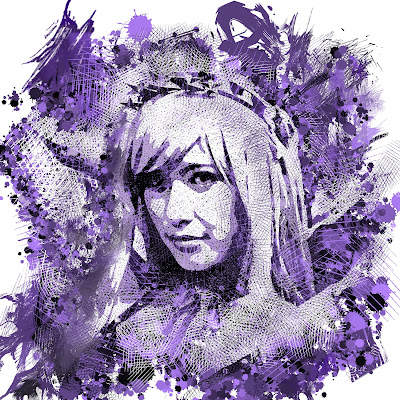
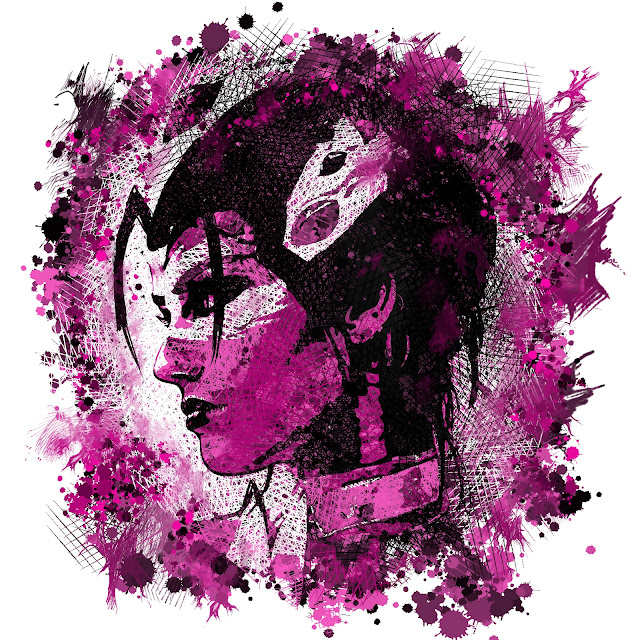
    • after editing photos in too many different ways I reached a "limit" until I rediscovered drip painting - I always liked that abstract painting technique but was never able to paint it digitally until I bought a graphic tablet and Clip Studio Paint and found a way to combine that technique with editing my portraits
    • 100 different portraits are offered as 15x15cm high quality prints on cardboard


Maybe you like these projects and consider supporting them, I would be happy.

Thank you in advance - Enjoy!

Freitag, 15. Januar 2021

Kickstarter - Postcards of Japan - from Hokkaido to Okinawa

Hello everyone,

after many months of inactivity and Corona I wanted to post something again.


I had started a Kickstarter campaign, because I normally travel to Japan every year and in 2020 I can't so I wanted to "give something back", creating that project to print postcards that I would like to offer for international shipping, giving the opportunity for some sort of inspirition for future travels or just for decoration.

Imagining someone would be inspired to travel to those places and using one of my cards to send it back home after exploring those spots themself is a nice idea.

The last hours have started and only a few are left to back my project.

If you like the idea of a poctcard pictures from Hokkaido to Okinawa, just follow this link: http://kck.st/36fwe3E, I am happy about every support.

Thank you and enjoy

Here's a small preview of some of those cards:


Donnerstag, 21. September 2017

MONSTER HUNTER WORLD @ Tokyo Game Show 2017

As almost every year since 2012 I visited Tokyo Game Show this September. One of the biggest and maybe the most exciting booth every year was the CAPCOM booth, especially because of the new installment of the Monster Hunter series, MONSTER HUNTER WORLD. The first public presentation and a playable DEMO was available at GamesCom but people had line up for several hours because the demand was a lot bigger than expected.

To compare the atmosphere here you can find some old TGS articles:

Tokyo Game Show 2012 - the first time at Makuhari Messe
Tokyo Game Show 2014 - Thursday - Opening Day and press day #1
Tokyo Game Show 2014 - Saturday - Cosplay Selection
Tokyo Game Show 2014 - Sunday

Tokyo Game Show 2016 - Monster Hunter Stories - RIDE ON!

Monster Hunter World is really awesome, a freely wild world that you can explore without being devided in separate areas to always reload before entering. A monsters were available to hunt down as well as the opportunity to track them and gather items.

Like every year they had a giant flagship wyvern statue to take pictures of, especially when one of their hired Cosplayers was posing in front of it.

Monster Hunter World was definitely my highlight of this year's TGS.

Other Interesting areas were Capcom's shooting range, as well as other nice games from Square Enix like the Upcoming Remake of Seiken Densetsu 2 (Secret of Mana) for PS4 and PSVITA.

As usual there are always some funny things to see or try/play. The new Warriors title, FIRE EMBLEM WARRIORS from Koei Tecmo for Nintendo Switch got me really psyched.

Beside the games and the new merchandise the Cosplayers are a huge attraction on Saturday and Sunday.

Enjoy the pictures!


See you again next year!

Freitag, 4. August 2017

Drones in Japan

Flying drones in Japan ain't easy, if you're unexperienced controlling it as well, but I am actually talking about the lack of information about RED ZONES (no flight area), especially the languare barrier is a big issue, the only official sites about rules that you can find is about the general stuff, not next to airports, not above 150m...

http://www.mlit.go.jp/en/koku/uas.html

Violating those laws can cost up to 500,000 yen.

By reading those information I didn't think a fly over the Ueno park in Tokyo at night (the restrictions at night seem to be new) would violate anything - actually it doesn't, no densely inhabited destrict, no airport nearby, no event, almost nobody at the park at night.

That's why I tried a short flight last year after Tokyo Game Show Press day.
Shortly after starting my drone a few police officers were standing behind me, asking if this is my drone, although they had to wait for an interpreter. I violated the law, because the whole city of Tokyo is a RED ZONE, how could I know. They took me to the police station and made me feel like a criminal, checking all my stuff, each and every part of it.

Luckily I didn't have to pay any ammount or go to jail, but I had to write a letter to the chief officer of the station that I didn't know about that law and I also had to promise not to fly my drone again in Tokyo.

But my questions about those "secret" RED ZONES kept unanswered - TOKYO NOT ALLOWED... - that's all. I saw many videos of drones in Tokyo, so I still wonder how they got their permissions, because the Police officers told me it's almost impossible to get a permission.

It took a while and a lot of effort to find out something about those NO FLIGHT ZONES, but this source is japanese only, but finally I am able to check the spots where I want to fly, for example Fushimi Castle in Kyoto, I might try this spot during my next trip to Japan.

Here's the HOLY GRAIL for areas to fly a drone in Japan:
RED ZONE MAP JAPAN

The only flight that I was able to do yet was above Mount Iwafune a place where many Super Sentai (Western version: Power Rangers) explosion scenes where shot.


The drone I used is the DJI PHANTOM VISION 2, before making the first videos, you should practice the general flying. If you use it together with a GOPRO like I do BE CAREFUL WITH THE GOPRO WIFI, if you switch on the GOPRO Wifi and start your drone, you can't control it, those 2 frequences interfere so you might LOSE YOUR DRONE AND YOUR CAMERA.

I will try to make a few more drone pictures on my next trip to Japan.

Mittwoch, 14. September 2016

Picture of the Day #20 Shinto Marriage at Meiji Shingu

I've visited the Meiji Shingu in Tokyo many times, it's named after Emperor Meiji like the Meiji era / Meiji Restauration as well. This was the historical period where Japan opened to the West, a good movie about that is "Last Samurai" with Tom Cruise or the Manga "Kenshin" and the Anime "Rurouni Kenshin" by Nobuhiro Watsuki.

The easiest way to get to the Yoyogi Park is by getting off at the JR or METRO station of Harajuku

Every Sunday you can see many of those shinto marriages. In this picture the husband and wife to be are under the umbrella, just behind the 2 Miku. Behind the couple the parents and the grandparents are walking.

In this ceremony the bride is "packed" like a gift that is handed over to the broom's family. Taking a big family photograph is also part of that.

Other daily pictures can be found in the Picture of the Day section and on INSTAGRAM, where you can also find a few more pictures about my many trips to Japan, as well as some video game stuff.

Direct Link: Instagram